Plumbing supply leaks
Pinholes, failed valves, and loose fittings can soak drywall and flooring quickly. Moisture often spreads under baseboards and into adjacent rooms.
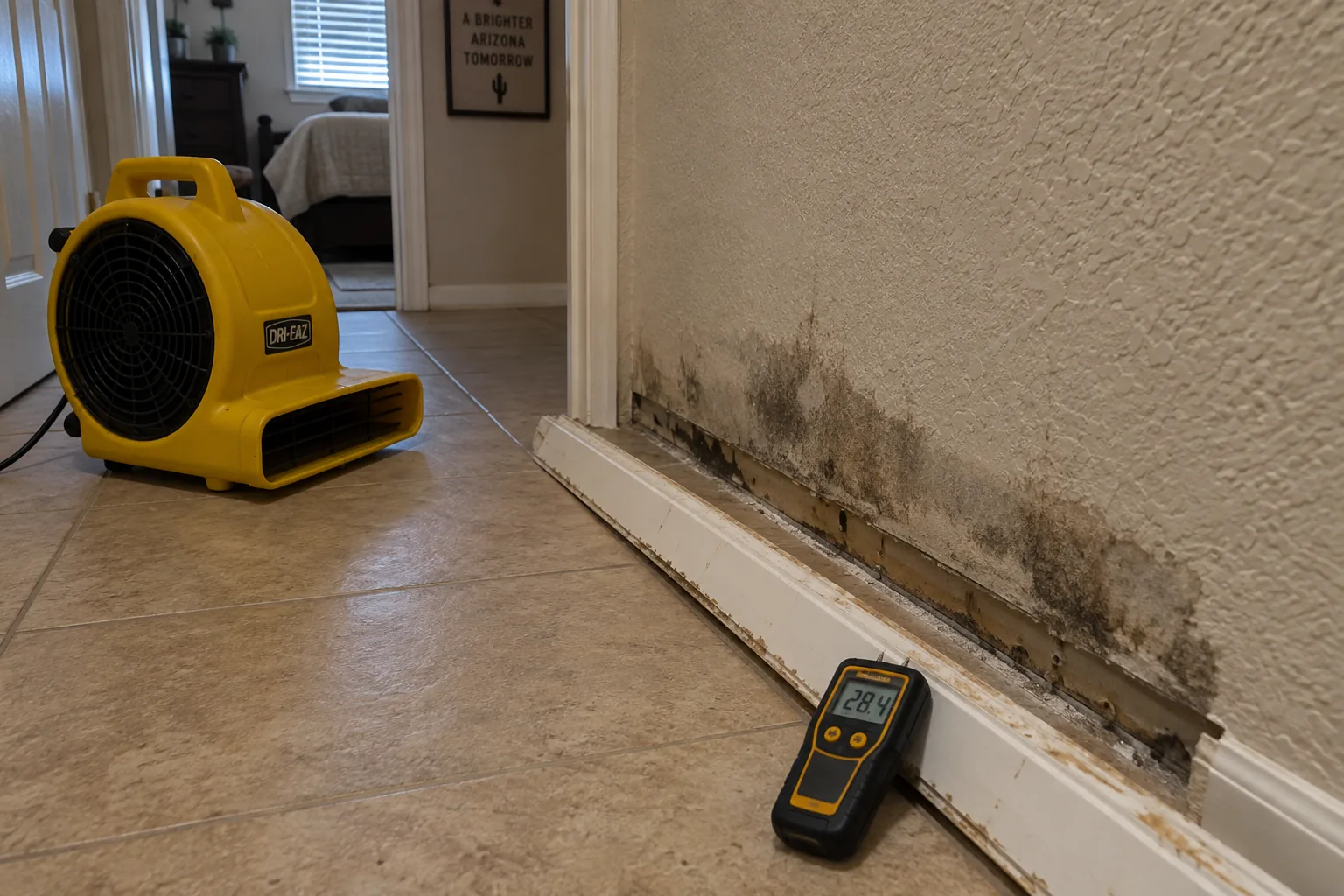
When water gets into floors, walls, or cabinets, time matters. We inspect the source, dry the structure with professional equipment, and document what we find so you can make clear decisions about repair.
Water restoration is the work that happens after water has entered a building: stopping the source, removing standing water, drying the structure, and preventing secondary damage like swelling, staining, corrosion, and microbial growth. If you are searching for Mesa water restoration, you are usually dealing with something urgent, and the first goal is to get the property stable.
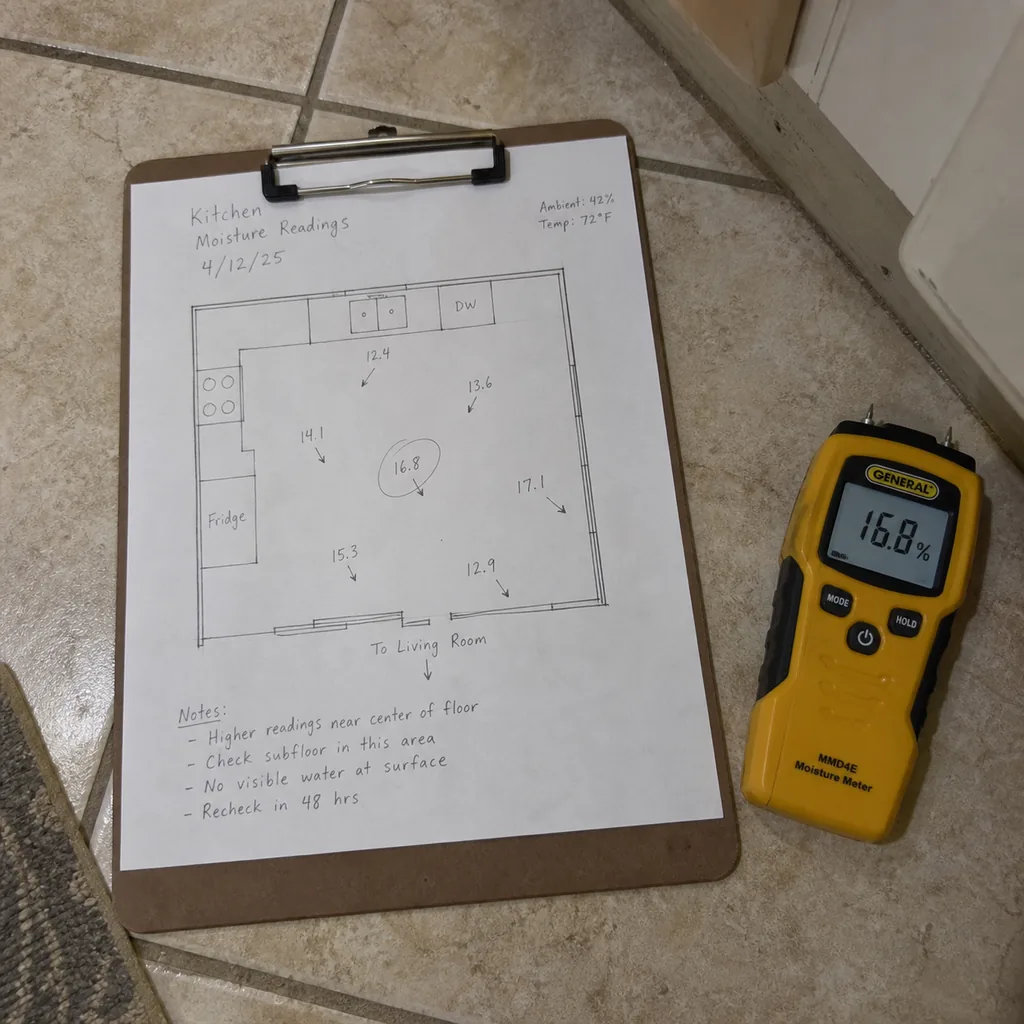
At Water Damage Mesa, we focus on the practical steps that protect your building materials. Drywall, baseboards, engineered wood, carpet pad, and insulation all respond differently to water, and the right approach depends on where the water traveled and how long it sat. Our team uses moisture mapping to find affected areas, then sets up controlled drying so materials dry evenly and safely.
Mesa homes often have finishes that show water fast, including painted drywall, laminate flooring, and MDF or composite cabinets. Those materials can wick moisture up and out of the original wet spot, which is why restoration should be driven by measurements, not guesswork or a quick visual check.
If you need broader help after the immediate situation is under control, our Mesa water damage restoration service covers the full sequence from mitigation through planning for repairs.
A good water restoration visit starts with a short triage: where the water came from, whether it is still active, and what materials were exposed. Then we move into a repeatable technical process.
We typically:
For water restoration Mesa AZ projects, this measurement-first approach is what keeps a small leak from turning into a bigger rebuild later.
Pinholes, failed valves, and loose fittings can soak drywall and flooring quickly. Moisture often spreads under baseboards and into adjacent rooms.
Dishwashers, washing machines, water heaters, and refrigerator lines can push water under cabinets and into wall cavities where it is not visible.
Clogged condensate lines and overflow pans can wet ceilings, wall chases, and closets. Drying requires confirming the route the water took.
Wind-driven rain can enter around flashing, skylights, and window frames. We trace the path of moisture, not just the stain.
Backed-up sinks, tubs, or floor drains can bring in contaminated water. Safety steps and removal scope depend on the water category and what was affected.
Mesa has a mix of older neighborhoods and newer builds, and water behaves differently depending on the structure. In areas with older slab-on-grade homes, water can migrate under hard flooring and show up far from the original leak. In newer subdivisions with tighter building envelopes, indoor humidity can climb quickly during drying unless the dehumidification plan is sized correctly.
We regularly see water restoration needs around:
Older housing stock and repeated remodels can create mixed materials behind walls, including different drywall thicknesses and layered flooring, making moisture mapping especially important.
Larger homes and multiple wet areas, including laundry rooms and upstairs bathrooms, can allow water to travel through framing bays and affect ceilings below.
A mix of rentals and owner-occupied homes makes clear documentation helpful for property managers and residents who need quick, verifiable updates.
We keep the focus on what is measurable: moisture content, affected assemblies, and drying progress. That is what drives restoration decisions, regardless of the zip code.
We locate the water source or confirm it is already controlled, inspect visible damage, and map moisture so the drying plan matches the actual footprint.
We remove standing water and reduce saturation where possible, then protect key areas such as flooring transitions, cabinet bases, and adjacent rooms to limit spread.
Air movers and dehumidifiers are placed and tuned for airflow and humidity control. When needed, we use containment or targeted drying to focus on wet assemblies.
We re-check moisture readings and environmental conditions and adjust equipment placement as the structure dries. Documentation is updated as readings change.
Once materials reach an appropriate dry state, we outline what can stay, what should be removed, and what repairs you may want to schedule next.
Water restoration in Mesa typically ranges from about $900 to $6,000+, depending on how far the water traveled and what materials were affected. A small, contained clean-water incident with limited drying may fall toward the low end, while multi-room structural drying with material removal and daily monitoring can move higher.
Final pricing depends on the water category, square footage, whether flooring or cabinets need detachment or removal, access to wet cavities, equipment days, and documentation needs. After the on-site inspection and moisture map, we confirm the exact scope and cost based on measured conditions.
“A supply line leak soaked our hallway and the edge of the living room. They found moisture under the flooring past where we could see it, set up drying right away, and kept us updated with readings so we understood what was happening.”
“We had an upstairs overflow that showed up as a ceiling stain. The team explained what could dry in place and what could not, and the daily check-ins made the whole situation feel a lot more controlled.”
Tell us what happened and where the water is showing up. We will schedule an inspection, map the moisture, and lay out a clear drying plan and scope before any major removal decisions are made.