Moisture mapping before demo
We use moisture meters and targeted inspection to mark the affected area. That reduces unnecessary removal while still catching hidden spread behind baseboards and under floors.
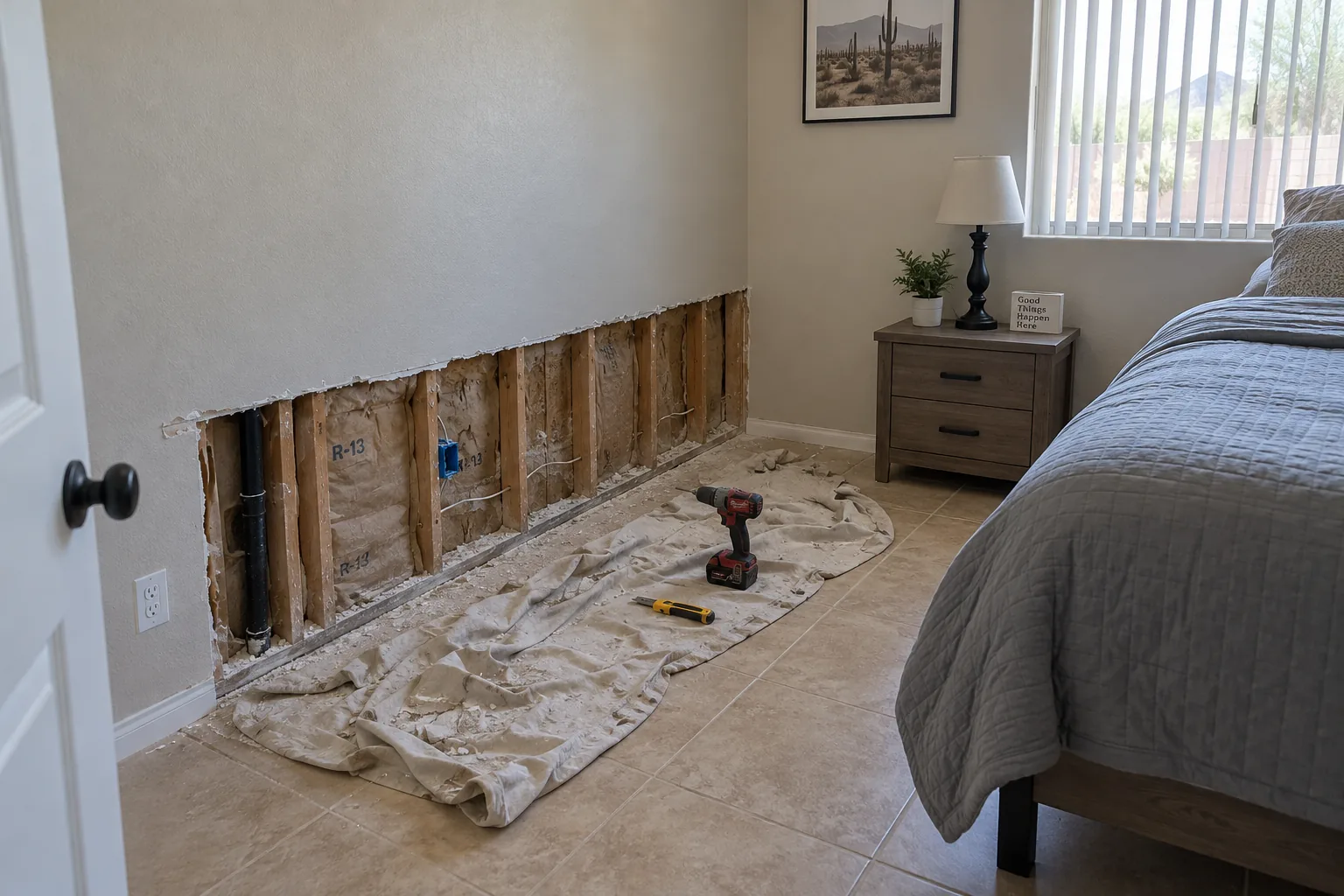
Fast, careful repair after leaks or flooding, with a clear scope of work and documentation you can use with your insurance adjuster.
If you are dealing with a leaking supply line, an overflow, or storm water that made it indoors, the next steps matter. Water damage repair Mesa AZ homeowners need usually comes down to two priorities: stopping ongoing damage and restoring the building materials the right way so the problem does not come back.
At Water Damage Mesa, we repair water-damaged drywall, baseboards, flooring, and affected structural areas after the water source is controlled. We also focus on the details that drive long-term results: moisture mapping, drying verification, and repair methods that match how the home is built.
Mesa homes commonly include slab-on-grade construction and finished interiors where water can spread under flooring before you see it. That is why we start with targeted inspection and moisture readings, not guesswork, and we put everything in writing so you know what is being repaired and why.
Water damage repair is the rebuild and restoration work that follows a water event. Drying and cleanup are important, but repairs are what bring the space back to normal.
Common repair items include:
We also look for the less obvious failure points that cause repeat issues: swelling at the bottom edge of drywall, delamination of underlayment, and moisture trapped behind tile or inside wall cavities. When the scope calls for it, we document moisture levels over time so repairs start only when materials are dry enough to rebuild safely.
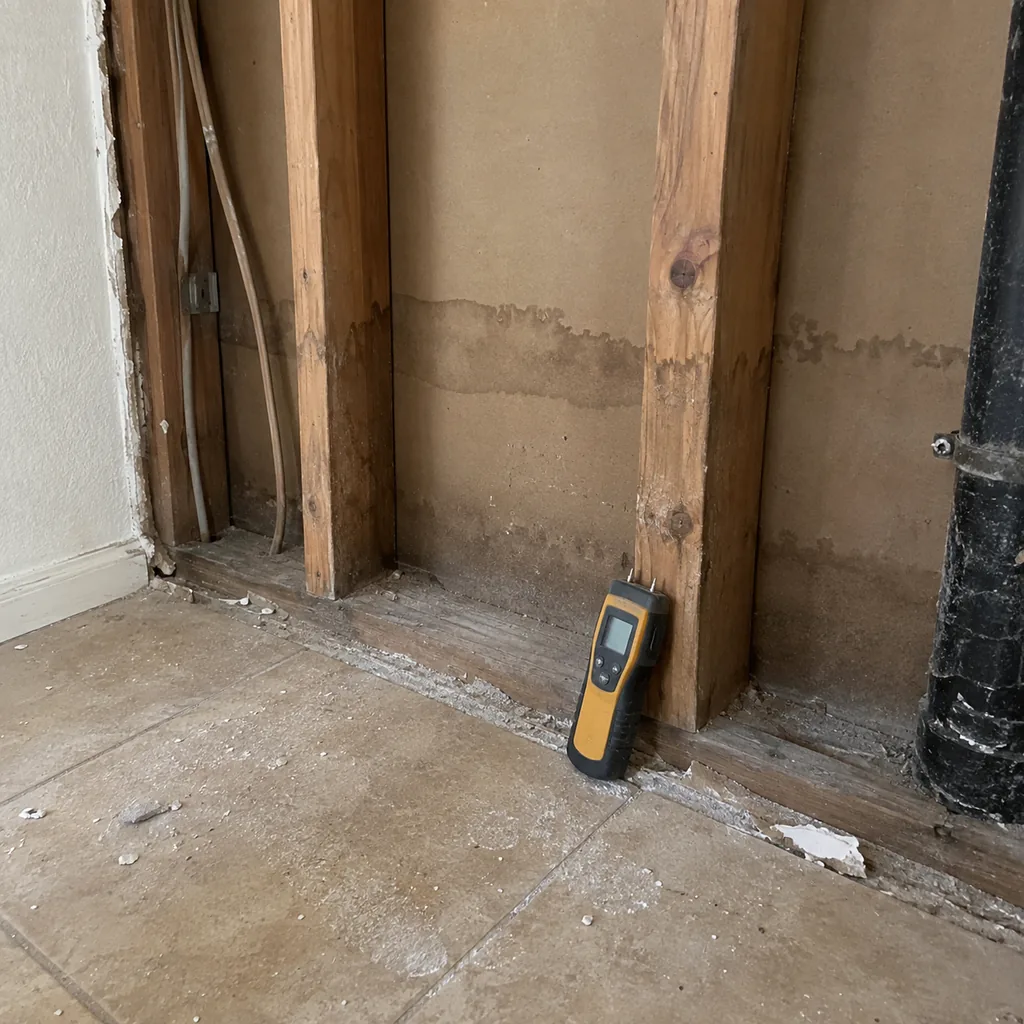
We use moisture meters and targeted inspection to mark the affected area. That reduces unnecessary removal while still catching hidden spread behind baseboards and under floors.
Plastic containment and negative air practices are used when demolition could release dust or contaminants. The goal is to keep the rest of the home livable while work is underway.
Repairs start after materials reach appropriate dryness, not on a calendar. This helps prevent paint failure, swelling trim, and lingering odors.
We match drywall thickness, texture pattern, and paint blending so repaired areas look like part of the original room, not a patchwork.
When an insurance claim is involved, clear photos and a written scope help align expectations between the homeowner and the adjuster on what is being repaired.
Water damage does not wait. We prioritize active leaks and spaces that cannot be safely used, and we keep you updated on timing as drying and material lead times change.
We identify affected materials, check likely migration paths—walls, flooring seams, and adjacent rooms—and define what needs removal versus what can be dried in place.
We set containment if needed, protect flooring and walk paths, and coordinate shutoff or access if the water source repair is still in progress.
Damaged porous materials are removed as required, then dehumidifiers and air movers are placed based on the room size and moisture load so drying stays controlled.
We recheck moisture levels, confirm what can be rebuilt, and review finish selections if replacement materials are needed, including trim profiles, paint sheen, and flooring type.
We complete the repairs, clean the work area, and walk the project with you so you can confirm the repairs and understand any maintenance steps.
Water damage does not look the same in every home. In Mesa, a few patterns show up repeatedly, and they affect how we plan repairs.
In older central neighborhoods near Downtown Mesa, you may see multiple layers of paint and texture, and sometimes older plaster or different drywall thicknesses. Matching finishes matters, and repairs often involve extra prep to blend the patch so it disappears after paint.
In areas with a lot of slab-on-grade homes, water can travel under floating floors and show up far from the original leak. That is why we check adjacent rooms and transitions, not only the visibly wet spot.
For properties near the US 60 corridor and other high-traffic areas, owners often need repairs scheduled around business hours or tenant access. We can structure the work to keep paths clear, limit dust migration, and finish critical areas first.
If your situation is more extensive, our team also performs water damage restoration when the job requires full mitigation, contents handling, or broader drying across multiple rooms.
Most water damage repair projects in Mesa typically range from about $900 to $6,000+, depending on how many materials need to be removed and rebuilt. Minor repairs—small drywall and baseboard sections—may land closer to $900 to $2,000, while multi-room flooring and cabinet repairs can run $4,000 to $12,000+.
Final cost depends on the water category—clean versus contaminated—how far moisture spread under flooring or into walls, the amount of demolition required, finish matching such as texture and paint, and access. The exact price is confirmed after an on-site inspection and a written scope of work.
“A supply line leak soaked the wall and the laminate in the next room. They mapped the moisture, explained what had to come out, and the repaired area blended in after texture and paint.”
“What I appreciated most was the documentation. The photos and the written scope made the conversation with insurance much easier, and the repairs were finished when they said they would be.”
“We had an overflow that got under baseboards in two rooms. They kept dust contained and the house stayed usable during the work. No lingering odor after everything dried and was rebuilt.”
Tell us what happened and what areas are affected. We will inspect the damage, explain what can be dried versus what must be replaced, and outline a repair plan you can feel confident about before work starts.