Bathrooms and tub surrounds
Grout lines, caulk breaks, and slow leaks at valves can feed hidden moisture behind tile or fiberglass surrounds, especially when ventilation is weak.
Get clear answers about what's growing, where it's coming from, and what it will take to fix it. Our inspections in Mesa focus on evidence, moisture conditions, and a practical plan you can act on.
If you're searching for mold inspection Mesa AZ, you're usually dealing with one of two things: a musty odor that won't go away, or visible spotting that's making you question what's happening inside the walls or under flooring. A good inspection doesn't guess. It documents conditions, finds likely moisture sources, and tells you what should happen next.
At Water Damage Mesa, our mold inspections in Mesa start with your concerns and end with a written, plain-English summary of findings. We look for visible growth, water staining, elevated moisture, and building conditions that let mold thrive, like trapped humidity, poor ventilation, and slow leaks. When sampling makes sense, we'll explain the purpose of each sample and what results can and cannot tell you.
Mold is a moisture problem first. The inspection is about identifying both the suspected growth and the conditions feeding it, so the next steps are based on evidence instead of fear or quick sales pressure.
A real-world inspection is part building science and part careful documentation. Here's what our team typically covers during a Mesa mold inspection:
Because Mesa homes vary widely, including older block construction, newer tract homes, and remodels with mixed materials, we focus on how your specific structure handles moisture, not on one-size-fits-all assumptions.
Grout lines, caulk breaks, and slow leaks at valves can feed hidden moisture behind tile or fiberglass surrounds, especially when ventilation is weak.
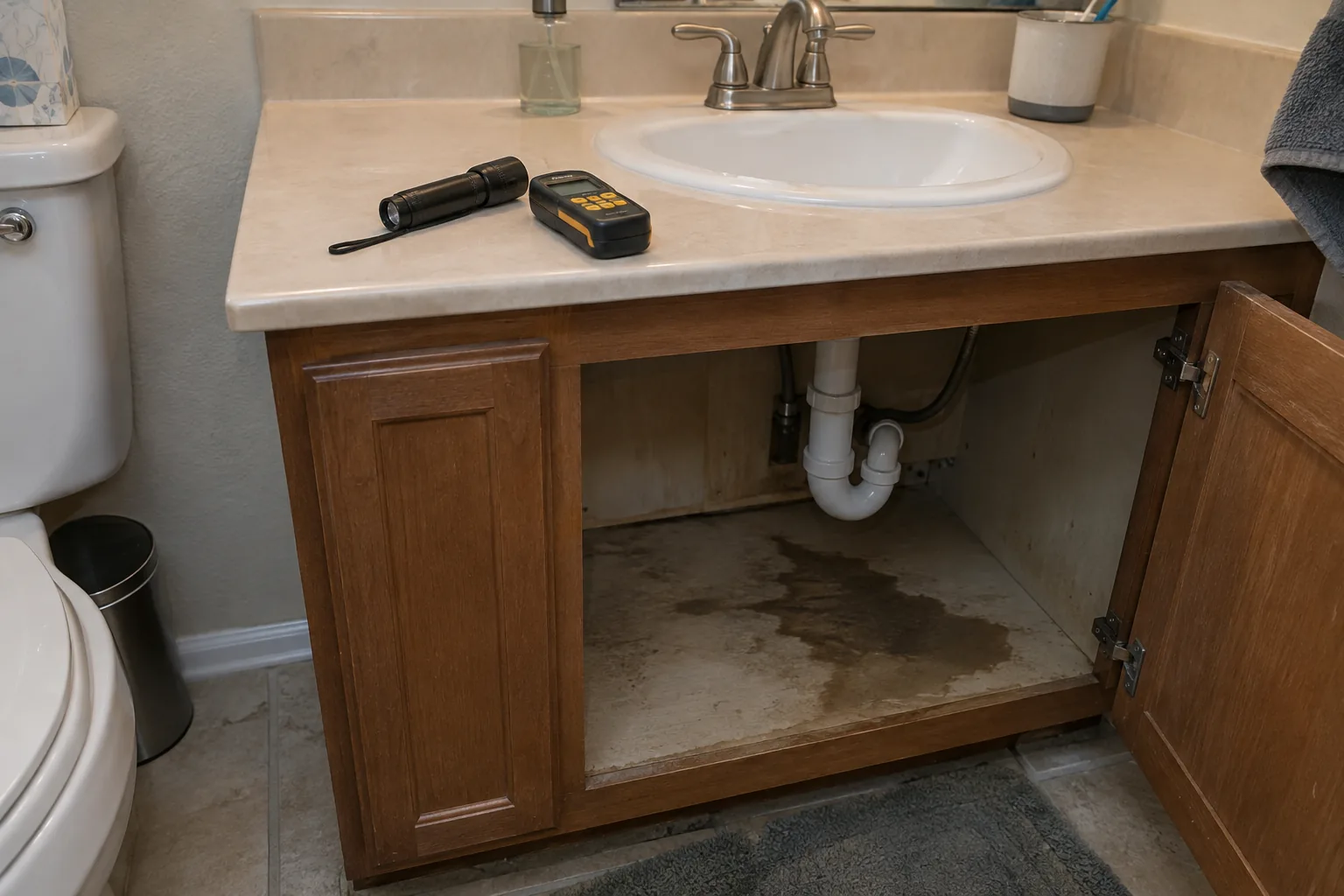
Small supply-line drips and drain seepage often go unnoticed until the cabinet floor swells or the odor shows up.
Washer hoses, drain standpipes, and pan overflows can wet drywall and baseboards. Lint buildup can also reduce airflow and increase humidity.
Condensation, duct sweating, or oversized equipment short-cycling can contribute to high indoor humidity and surface growth on nearby drywall.
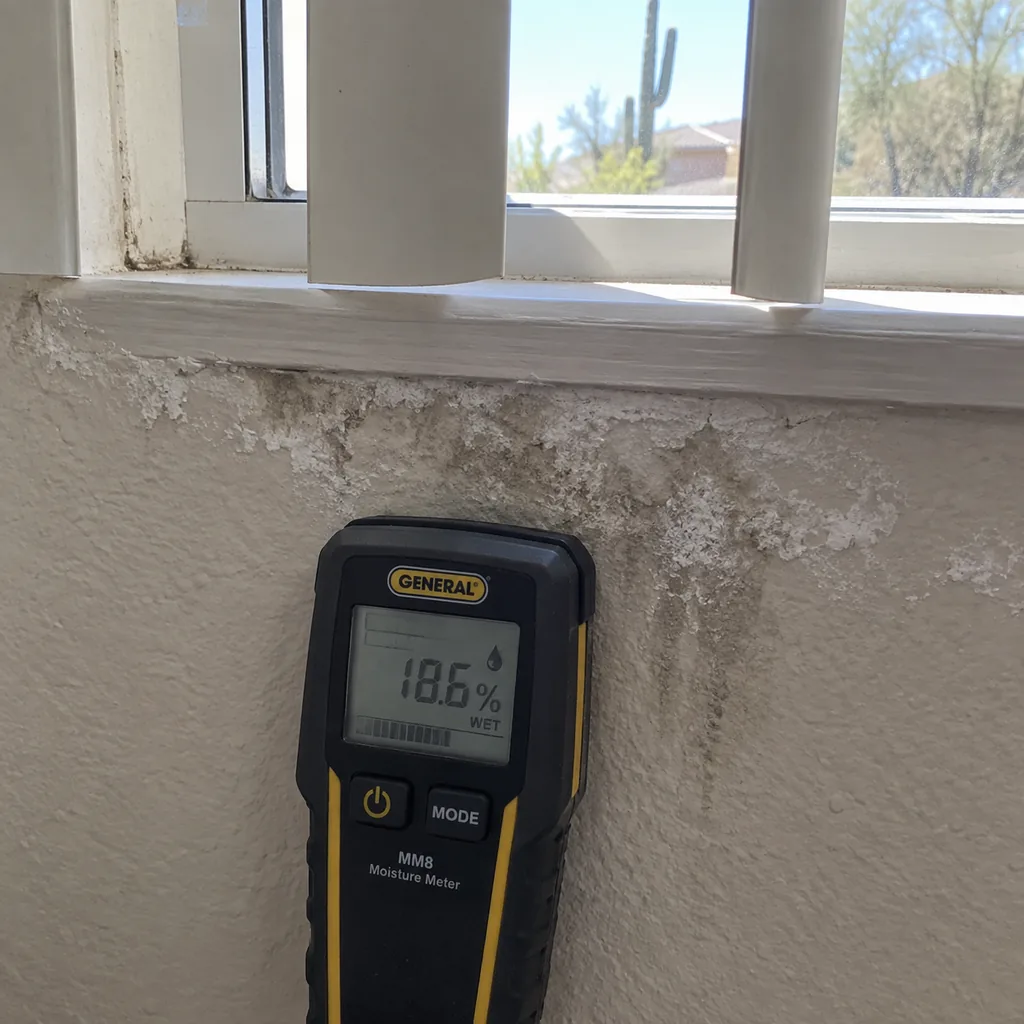
Condensation and minor intrusion at frames can wet drywall corners and baseboards, especially after storms or when seals and flashing age.
Shared walls can show staining or microbial growth when the garage stays humid or when a water heater or softener area has had leaks.
We gather the address in Mesa, what you're seeing or smelling, any known water events, and whether anyone in the home has sensitivities. This helps us arrive prepared.
We perform a visual survey and moisture mapping in the areas you're concerned about plus adjacent materials that commonly wick water, including drywall edges, baseboards, cabinets, and nearby flooring transitions.
If sampling is recommended, we explain what type, surface or air, where it will be taken, and how results may influence remediation scope, clearance planning, or documentation needs.
You get a straightforward explanation of what we found, likely moisture sources to correct, and what remediation or repair actions are reasonable. If you also need help after a leak or flooding event, our water damage restoration work often starts with the same moisture diagnostics and documentation.
Mold inspection in Mesa typically ranges from about $250 to $650, with most homes falling in the middle depending on size and how many areas need testing. A basic visual inspection with moisture checks is usually on the lower end, while inspections that include multiple samples, air or surface, and more extensive moisture mapping run higher.
Your final price depends on home size, access to suspected areas such as an attic, crawlspace, or behind built-ins, number of samples, and whether you need documentation for a real estate or landlord situation. Exact pricing is confirmed after we understand the scope and what testing, if any, is actually useful.
If you're seeing staining or smelling musty odors, get it inspected early. Finding the moisture source now can prevent a small affected area from turning into a bigger removal and rebuild later.
Call Now (623) 323-8077Tell us what you're noticing and where it's showing up. We'll walk the property, verify moisture conditions, and explain practical next steps based on what we find.