Bathroom ventilation issues
Recurring mold on ceilings, grout, or around exhaust fans often traces back to weak airflow, short fan run times, or humid air trapped in a small room.
If you smell musty odors, see staining, or have had a recent leak, get a clear inspection and a contained remediation plan that protects your home and the people in it.
Searching for mold remediation Mesa AZ usually means something has already happened: a plumbing leak under a sink, a slow roof drip, a sweating HVAC line, or water that sat too long after a storm. Mold is rarely the first problem. Moisture is.
Water Damage Mesa handles mold remediation with a practical goal: remove contaminated materials when needed, clean and treat remaining surfaces, and control the air so spores do not spread to clean areas. The work starts with identifying where the moisture came from and what building materials were affected. Without that, even a good cleanup can turn into a repeat problem.
Homes and condos around Mesa 85201 include a mix of older and newer construction. Older homes can have more hidden cavities—older cabinets, layered flooring, and drywall patches—where moisture lingers. Newer homes can still develop mold in common spots like bathrooms, laundry rooms, and around air handler closets when condensation is ongoing. Either way, the remediation plan should match what is actually there, not a one-size script.
A proper remediation is more than spraying a product and wiping a wall. The goal is to physically remove mold growth and the materials it has penetrated, then prevent cross-contamination while the area is opened up.
Typical components include:
If anyone proposes remediation without containment when there is visible growth, or without addressing the moisture source, ask what is preventing spores from spreading and what will stop regrowth.
Recurring mold on ceilings, grout, or around exhaust fans often traces back to weak airflow, short fan run times, or humid air trapped in a small room.
Slow drips can soak particle board and drywall behind cabinets. By the time staining shows, the cavity can already be affected.
A small leak, a sweating supply line, or a pan overflow can keep these tight spaces damp and unnoticed.
Condensate line clogs or poorly insulated lines can wet framing and drywall near the air handler. The right fix includes correcting the condensation issue.
Water can wick into drywall and insulation even when the floor looks dry. Moisture checks help determine what needs removal versus drying in place.
We look for visible growth, water staining, and odor patterns, then check materials with moisture readings to understand what is wet and what is still drying out.
Remediation holds up only when the moisture is addressed. If the source is ongoing, we coordinate the next steps so cleanup is not wasted.
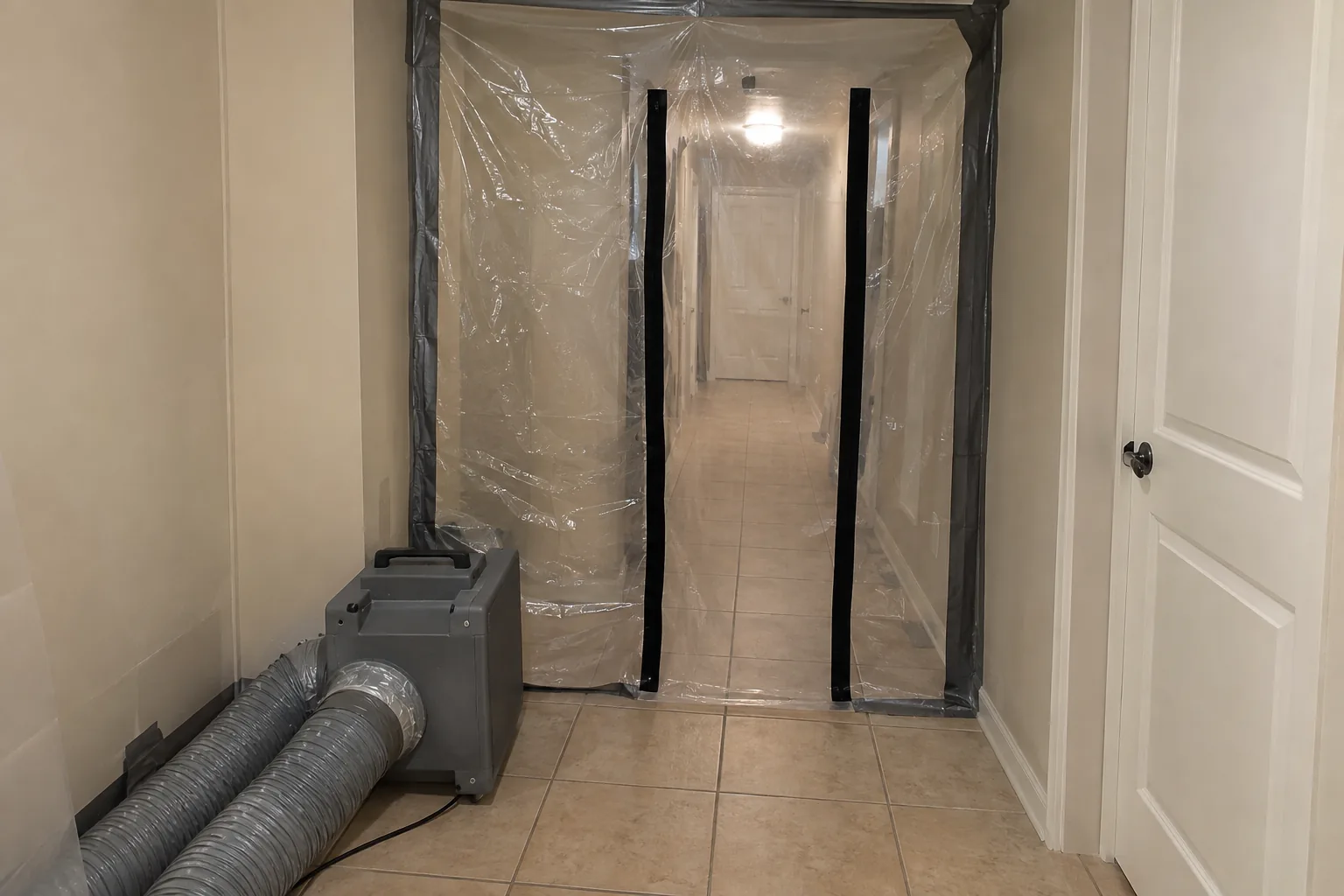
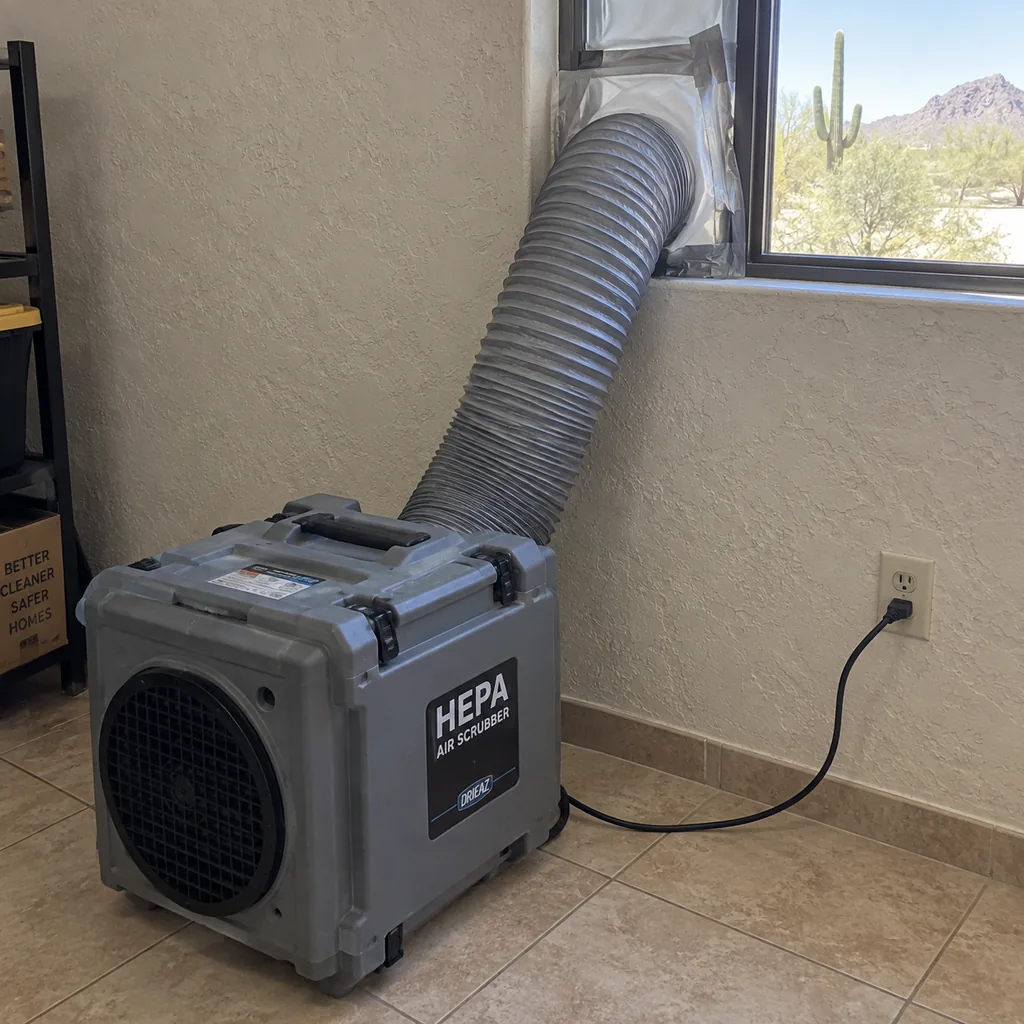
We isolate the work area and use HEPA-filtered negative air when needed to keep spores and dust from traveling through hallways, return vents, and living spaces.
Porous materials that cannot be reliably cleaned are removed. Remaining framing and hard surfaces are HEPA vacuumed and cleaned to meet remediation standards.
We dry the area back to safe moisture levels, apply treatment where appropriate, and review what was done so you understand the path back to rebuild and normal use.
Mold remediation in Mesa typically ranges from about $1,500 to $6,500 for many residential projects, with small, contained areas often on the lower end and larger, multi-room or HVAC-adjacent projects trending higher. A limited bathroom or under-sink scope may run $1,500 to $3,000, while a kitchen wall cavity or multiple affected rooms commonly lands around $3,000 to $6,500+.
Final price depends on how far contamination spread, how much drywall, insulation, or cabinetry must be removed, containment level, access, and drying needs. The exact cost is confirmed after an on-site inspection with a written scope.
If you want to avoid repeat mold, start with an inspection that ties the cleanup plan to the actual moisture source and the materials affected.
“We had a musty smell that wouldn't go away after a small leak. The team set up containment, opened the wall behind the vanity, and showed us exactly what was wet and what had to be removed. The house didn't end up covered in dust, and the odor was gone after everything dried.”
“What I appreciated most was the clear scope. They explained what was being removed, what could be cleaned, and what needed drying time before any rebuild. It felt controlled instead of chaotic.”
Tell us what you're seeing and where it's happening. We'll schedule an on-site assessment in Mesa, explain the scope in plain language, and outline what remediation will take to make the area safe to rebuild and use again.